
Biblical Education
Teaching the Next Generation
Building a home where children learn Yahweh's Word at the table, on the way, and at rest.
October 2, 2026 · 6 min read
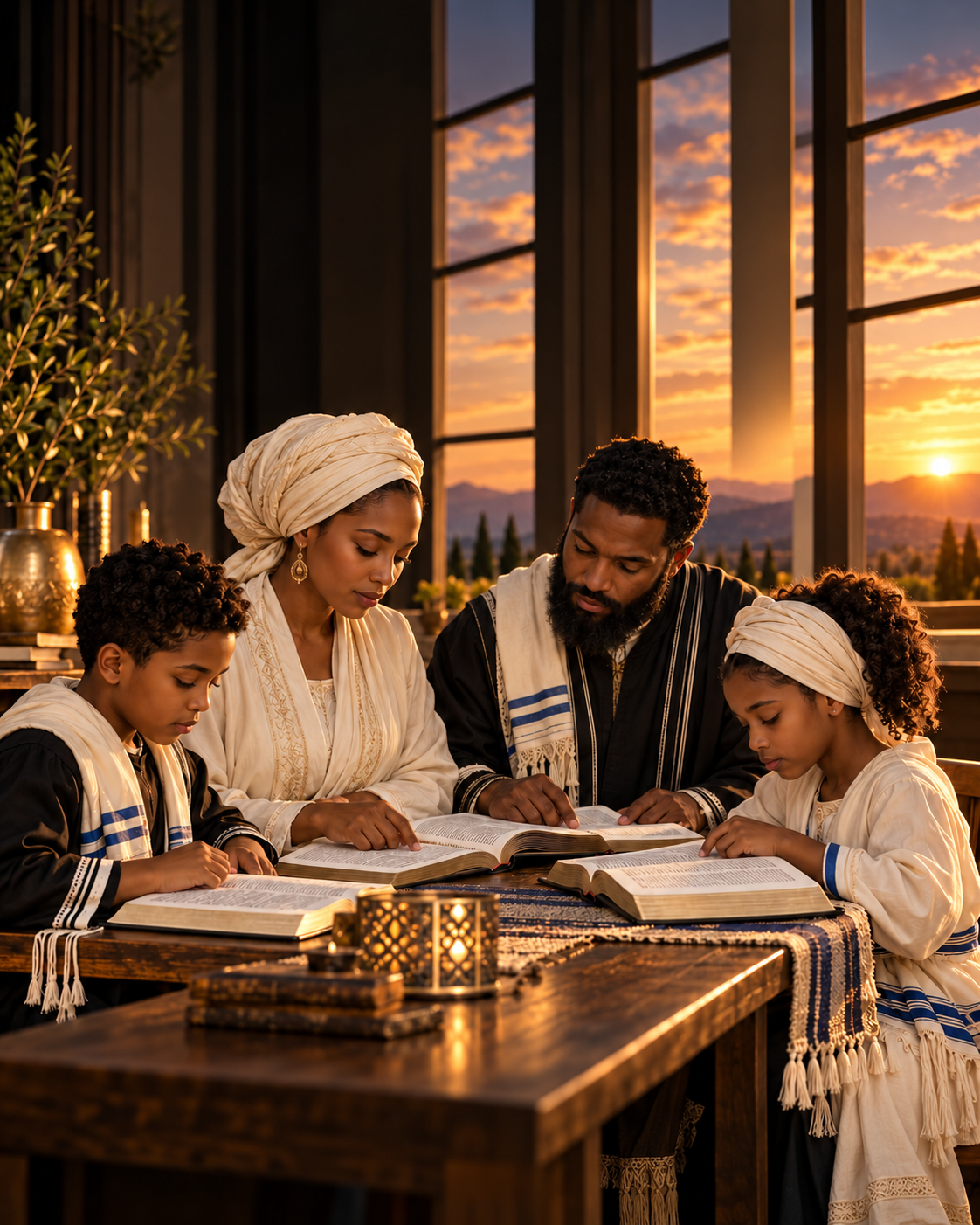
The Responsibility Begins at Home
Every generation has a responsibility to teach the next.
Our children are growing up in a world filled with competing voices, beliefs, philosophies, and influences.
From social media to entertainment, from schools to friendships, they encounter messages every day about who they are, what they should value, and how they should live.
But who is teaching them what Yahweh says?
Deuteronomy 6:6–7 (KJV)
And these words, which I command thee this day, shall be in thine heart: And thou shalt teach them diligently unto thy children, and shalt talk of them when thou sittest in thine house, and when thou walkest by the way, and when thou liest down, and when thou risest up.
Yahweh did not instruct Israel to teach His commandments occasionally.
He commanded that His Word become part of everyday life.
Biblical education was never intended to be limited to a single weekly lesson or congregation gathering.
The home was to be a primary place of instruction.
Children Must See What We Teach
One of the most powerful ways to teach a child is through example.
Children may forget portions of what we say, but they often remember what they repeatedly observe.
If we teach honesty but practice deception, our example contradicts our instruction.
If we teach patience but consistently respond with uncontrolled anger, our behavior sends a conflicting message.
If we teach that Yahweh's commandments matter but disregard them when obedience becomes inconvenient, children notice.
This does not mean parents must be perfect.
It means we must strive to be consistent and willing to acknowledge our mistakes.
Our children need to see us studying Scripture, seeking understanding, correcting our behavior, and returning to Yahweh when we fall short.
A parent who admits wrongdoing and makes correction can teach a powerful lesson about humility and repentance.
Biblical instruction becomes more effective when children see the Word being lived rather than simply quoted.
Teach Identity Through Scripture
One of the most important lessons we can give our children is a foundation in biblical identity.
For Israelite families, understanding the history, covenants, responsibilities, and promises recorded in Scripture is essential.
But biblical identity must be accompanied by biblical character.
It is not enough for a child to know about the children of Israel if that child does not understand the importance of righteousness, humility, justice, mercy, and obedience.
Deuteronomy 10:12 (KJV)
And now, Israel, what doth Yahweh thy Elohim require of thee, but to fear Yahweh thy Elohim, to walk in all his ways, and to love him, and to serve Yahweh thy Elohim with all thy heart and with all thy soul,
Our children should understand that being set apart comes with responsibility.
Yahweh called Israel to be a holy people.
Holiness should be reflected in our conduct, relationships, speech, and treatment of others.
True biblical identity is not simply something we proclaim.
It is something that should influence how we live.
Make Scripture Part of Everyday Conversations
Teaching children does not always require a formal lesson plan.
Some of the most meaningful biblical lessons happen during ordinary moments.
A disagreement between siblings becomes an opportunity to discuss forgiveness and peace.
A child struggling with honesty becomes an opportunity to teach the commandment against bearing false witness.
A family preparing for the Sabbath becomes an opportunity to revisit the fourth commandment.
A conversation about the stars, trees, animals, or seasons becomes an opportunity to discuss Yahweh as Creator.
These moments connect Scripture to real life.
They help children understand that Yahweh's Word is not confined to ancient stories.
His instructions remain relevant to the decisions they make today.
Teach According to Their Understanding
Children learn differently at different ages.
A young child may benefit from storytelling, repetition, songs, pictures, and simple Scripture memory.
An older child may be ready for deeper questions concerning the law, the prophets, history, biblical prophecy, and the teachings of Yahshua.
Teenagers may need room to discuss difficult topics, challenge assumptions, and work through questions thoughtfully.
Parents should not fear sincere questions.
Instead, questions can become opportunities to open Scripture together.
If we do not know an answer, we can demonstrate humility by saying, "Let us study that."
This teaches children that learning Yahweh's Word is a lifelong responsibility.
The Importance of Teaching the Sabbath and Feast Days
Yahweh's appointed times offer meaningful opportunities for biblical education.
Leviticus 23 outlines His appointed feasts and holy convocations.
Rather than treating these occasions as merely dates on a calendar, families can use them to teach history, remembrance, obedience, and Yahweh's faithfulness.
During Passover, children can learn about Israel's deliverance from Egypt and the significance of redemption.
During the Feast of Unleavened Bread, families can discuss obedience and the removal of leaven as commanded in the feast.
During the Feast of Tabernacles, children can learn how Yahweh caused Israel to dwell in booths after bringing them out of Egypt.
During the weekly Sabbath, they can remember creation and Yahweh's command to rest.
These appointed times provide recurring opportunities to reinforce biblical understanding.
They allow the lessons of Scripture to become part of family life.
Preparing Them to Stand Firm
Our children will not always be under our immediate guidance.
They will grow.
They will encounter different ideas.
They will make decisions without us standing beside them.
Our responsibility is to provide a foundation they can draw from when those moments arrive.
Proverbs 22:6 (KJV)
Train up a child in the way he should go: and when he is old, he will not depart from it.
This verse emphasizes the importance of early instruction, though it should not be treated as a guarantee that children will never make wrong choices.
What we teach matters.
What we model matters.
The environment we cultivate matters.
When we consistently point our children toward Yahweh's Word, we provide them with knowledge they can carry into adulthood.
Leaving a Legacy of Truth
Material possessions can be lost.
Money can be spent.
Homes and belongings can change hands.
But the Word of Yahweh planted in a child's heart can influence generations.
Psalm 78:4–7 speaks of making Yahweh's works known to the coming generation so that children yet to be born might set their hope in Elohim and keep His commandments.
That is the kind of legacy worth building.
Not simply children who know religious terminology.
Not simply children who can repeat familiar Bible stories.
But children who understand Yahweh's commandments and are equipped to choose obedience for themselves.
Final Reflection
We cannot control every influence our children will encounter, but we can be intentional about the foundation we give them.
Teach them when you sit.
Teach them when you walk.
Teach them when you rise.
Teach them when you rest.
Because the truth we teach today becomes part of the foundation the next generation stands upon tomorrow.
Reflection question: If your children learned about Yahweh primarily by observing your life, what would they understand about Him?
Continue Growing in Truth
At The Knowledge of His Truth, we believe that understanding Yahweh's Word should lead to a life of obedience, wisdom, and spiritual growth. Join us as we study the Scriptures, rediscover the old paths, and encourage households to walk according to His commandments.
Study the Word. Walk in Truth. Keep the Commandments.